
Indian Society20 November 20264 min read
President Murmu urges preventive care and equitable access at medical convocation
President Droupadi Murmu called for preventive care and locally responsive research at a medical convocation in New Delhi on November 20, 2026. At the 12th convocation of the Atal Bihari Vajpayee Institute of Medical Sciences (ABVIMS) and Dr. Ram Manohar Lohia Hospital, 324 medical professionals graduated. Murmu also urged a One Health approach and more equitable access to healthcare.
How the graduating cohort was composed
The graduates included students from undergraduate, postgraduate and super-specialty programmes. The institution awarded 58 gold medals for academic performance and clinical excellence.
| Programme and batch | Graduates | Men | Women | Specialties |
|---|---|---|---|---|
| MBBS, 2020 batch | 100 | 79 | 21 | Not stated |
| MD/MS, batches spanning 2022–2025 | 177 | 115 | 62 | 17 broad specialties |
| DM/M.Ch./DrNB, batches spanning 2022–2025 | 47 | 35 | 12 | 13 super-specialty disciplines |
Murmu said the number of women among the graduates reflected growing female participation in medical education and healthcare.
How RML Hospital supports clinical training
More than 19 lakh patients used the hospital’s outpatient department (OPD) services in 2025. Murmu said the patient volume gave students hands-on experience and helped strengthen their clinical knowledge and confidence.
The hospital commissioned a 666-bed Super-Specialty Block with departments for Radiotherapy, Nuclear Medicine, Surgical Oncology and Gastrointestinal Surgery. In 2025, it became the first Central Government hospital in India to receive full accreditation from the National Accreditation Board for Hospitals and Healthcare Providers (NABH).
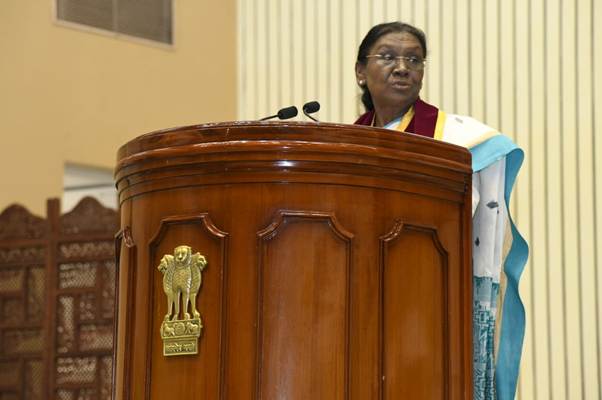
Union Health and Family Welfare Minister J.P. Nadda also cited the institution’s work in organ donation and retrieval, complex surgery, research, specialised clinical services and infrastructure. He released the institution’s Annual Report (2025–26) and the ABVIMS Journal.
What health-system priorities Murmu highlighted
Murmu said the National Health Policy, 2017 places greater emphasis on preventive and promotive services alongside curative care, while strengthening rehabilitation and palliative care. She pointed to early screening, detection and management of non-communicable diseases, including diabetes, mental health conditions and cancer.
Preventive care and access to services
Murmu stressed the need for large-scale screening, particularly among vulnerable populations. She said approximately 1.75 lakh Ayushman Arogya Mandirs were operational across the country, while medical education and tertiary care had expanded into Tier-2 and Tier-3 cities.
Telemedicine, she said, could help overcome geographical barriers by connecting people in remote areas with quality medical consultations. Government initiatives over the past decade had expanded healthcare services from primary to tertiary levels, she added.
Health coverage through Ayushman Bharat schemes
Murmu cited two financial protection measures. The Ayushman Bharat Pradhan Mantri Jan Arogya Yojana (AB PM-JAY) provides health coverage of ₹5 lakh per family per year.
The Ayushman Vaya Vandana Yojana extends ₹5 lakh in coverage to all people aged 70 and above, irrespective of socio-economic status.
Why Murmu called for a One Health approach
Murmu said One Health recognises the interconnection between human, animal and plant health and the environment. Zoonotic diseases, air and water pollution, climate change and environmental imbalances can affect human health.
She called for collaboration among human and veterinary medicine professionals, environmental scientists and other stakeholders to strengthen surveillance, prevention, early detection and preparedness for future health crises. She also urged research and preventive measures suited to local social, economic, nutritional and environmental conditions.
What Murmu asked new medical professionals to prioritise
Murmu urged graduates to uphold professional ethics, sensitivity and compassion, and to make healthcare effective, accessible, affordable and people-centric. She asked them to serve marginalised people in remote and underserved areas, strengthen primary healthcare, and contribute to research and innovation.
She said Artificial Intelligence could improve access, affordability and efficiency. Drawing on lessons from COVID-19, she called on medical professionals to adapt to technology while keeping care people-centred.
Murmu supported integrating Ayurveda and Yoga with modern medicine through co-location of Ayush services in government institutions and collaborative research. She said international cooperation through the Ministry of Ayush and the WHO Global Centre for Traditional Medicine could advance research and evidence-based traditional healthcare practices.
What Nadda said about medical education and public responsibility
Nadda described ABVIMS and RML Hospital as a centre for medical education and healthcare. He said the combination of high patient volumes and medical standards gave students practical learning.
He said medical education carried social responsibility and was supported by public investment, institutional resources and societal contributions. Nadda cited a government allocation of ₹15,000 crore to create 10,000 undergraduate and postgraduate medical seats, and urged graduates to serve society with dedication and professional excellence.
He also said 23 All India Institutes of Medical Sciences (AIIMS) had been established and operationalised over the past decade, and reiterated the government’s commitment to medical education and healthcare facilities across the country.